Hoe werkt een zonvolgsysteem?
Zonnepanelen produceren de meeste energie wanneer zonlicht ze onder een effectieve hoek bereikt. Omdat de zon gedurende de dag van positie verandert, kan een vast montagesysteem voor zonnepanelen niet dezelfde hoek ten opzichte van de zon behouden.
AzonvolgsysteemDit wordt opgelost door de positie van de PV-modules automatisch aan te passen aan de beweging van de zon.
Aenkelassige zonnevolgerDraait zonnepanelen langs één as, normaal gesproken van oost naar west.
's Ochtends zijn de panelen naar het oosten gericht. Naarmate de zon beweegt, draait de tracker de zonnepanelen geleidelijk naar het westen. Aan het einde van de dag keert het systeem terug naar de beginpositie voor de volgende ochtend.
De belangrijkste onderdelen zijn een montagestructuur, een torsiebuis, een aandrijfsysteem, een motor, een controller en een volgalgoritme.
De controller berekent de positie van de zon op basis van de locatie en het tijdstip van het project en stuurt vervolgens commando's naar het aandrijfsysteem. De motor roteert de constructie om de panelen correct op het zonlicht gericht te houden.
Simpel gezegd:
Volg de zon → pas de hoek van het paneel aan → vang meer zonlicht op → verhoog de energieproductie.
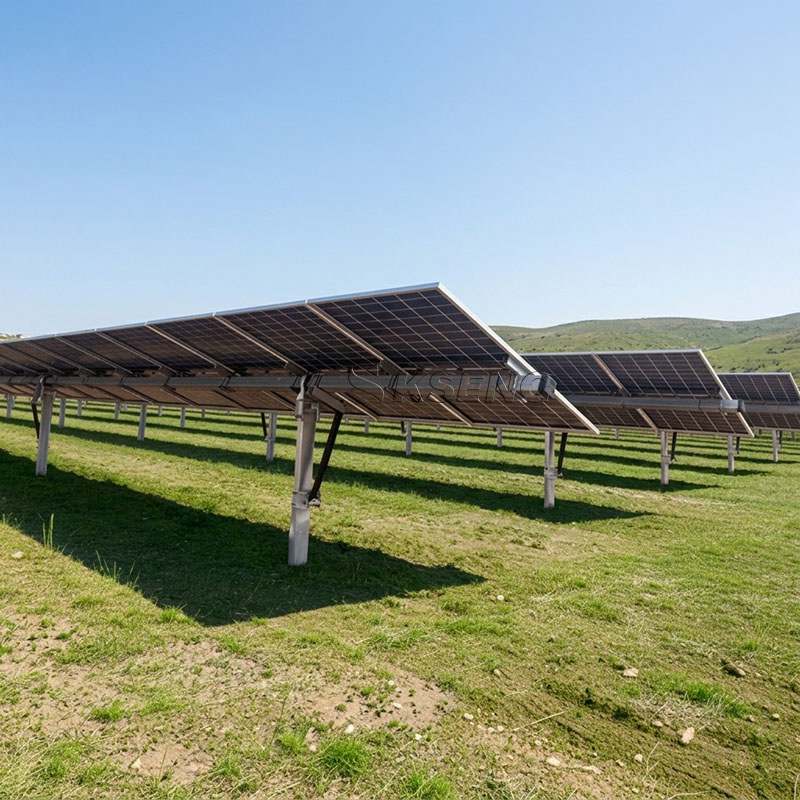
Vergeleken met een vaste montage kan een enkelassige tracker ervoor zorgen dat PV-modules gedurende de dag meer zonnestraling opvangen.
De belangrijkste voordelen zijn onder meer:
Hogere energieopbrengstdoor de zon te volgen
Betere prestaties 's ochtends en 's middags
Automatische trackingmet intelligente besturing
bescherming tegen windschadebij sterke windomstandigheden
Geschikt voor grootschalige, op de grond gemonteerde PV-projecten.
De daadwerkelijke energieopbrengst is afhankelijk van de locatie van het project, de hoeveelheid zonlicht, de configuratie van de modules, het terrein en het systeemontwerp.
Kseng Solar ontwikkelt montage- en volgsystemen voor zonnepanelen op grote schaal.
DeKseng Solar enkelassig zonvolgsysteemHet systeem combineert een robuuste montagestructuur met een betrouwbaar aandrijfsysteem en intelligente volgregeling. Het systeem past de zonnepanelen automatisch aan de positie van de zon aan, waardoor projecteigenaren de energieopbrengst kunnen verbeteren en tegelijkertijd een stabiele werking kunnen garanderen.
Voor EPC-aannemers en zonne-energieontwikkelaars vereist de keuze van een volgsysteem ook aandacht voor windbelasting, terrein, modulegrootte, funderingsontwerp, rijafstand, installatie en onderhoud.
Een goed ontworpen tracker draait niet alleen om het verplaatsen van de panelen. De mechanische structuur, het aandrijfsysteem, de besturingsstrategie en de projectomstandigheden moeten allemaal op elkaar afgestemd zijn.
Zonvolgsystemen met één as worden hoofdzakelijk gebruikt in:
Grootschalig gebruikzonneparken
Grote, op de grond gemonteerde PV-projecten
Commerciële zonne-energiecentrales
Projecten voor hernieuwbare energie
Grote EPC-zonne-energieprojecten
Ze zijn met name geschikt voor projecten waarbij een verhoogde energieproductie de extra investering ten opzichte van een vaste montage rechtvaardigt.
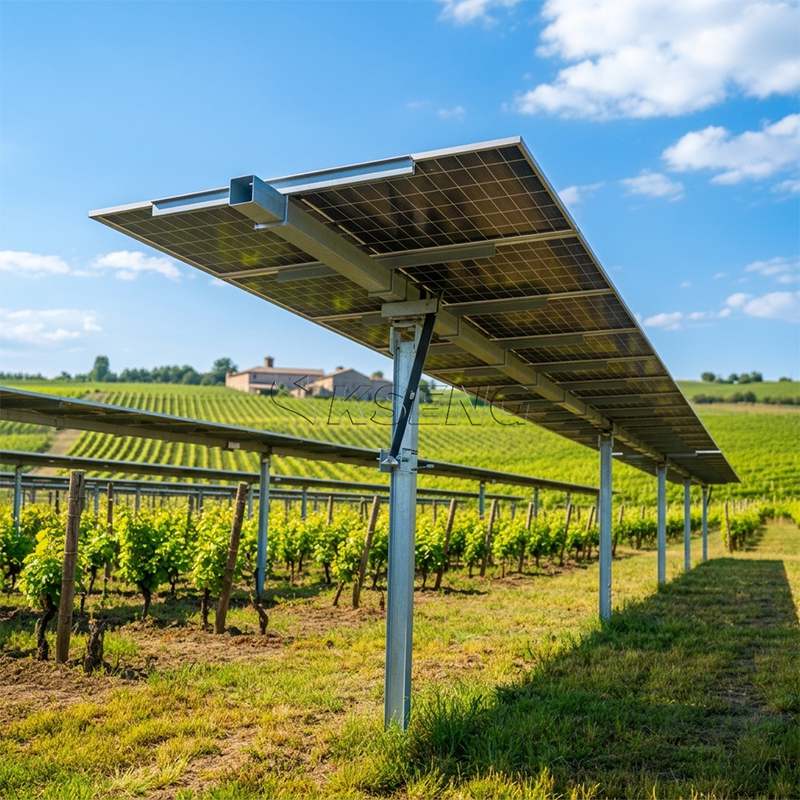
Aenkelassig zonvolgsysteemHet systeem volgt de zon door de PV-modules langs één as te roteren. Door de panelen overdag beter op het zonlicht af te stemmen, kan de energieopbrengst van een zonne-energieproject worden verhoogd.
Met de focus op technologie voor het monteren en volgen van zonnepanelen,Kseng SolarBiedt oplossingen voor enkelassige tracking voor grootschalige en op de grond gemonteerde PV-installaties, waarmee EPC-aannemers en zonne-energieontwikkelaars efficiënte en betrouwbare zonne-energiecentrales kunnen bouwen.
Tel : +86 0592-5795673
E-mail : info@xmkseng.com
: No.1, Xinshiqiao Rd., Xiang‘an Dist., Xiamen, Fujian, China.
: 11&12F, Huixin Wealth Centre, No. 891, Fanghu North 2nd Rd., Huli Dist., Xiamen, Fujian, China.



© 2026 Xiamen Kseng Metal Tech Co Ltd.Alle rechten voorbehouden.
 IPv6-netwerk ondersteund